What are we working on in 25-26?
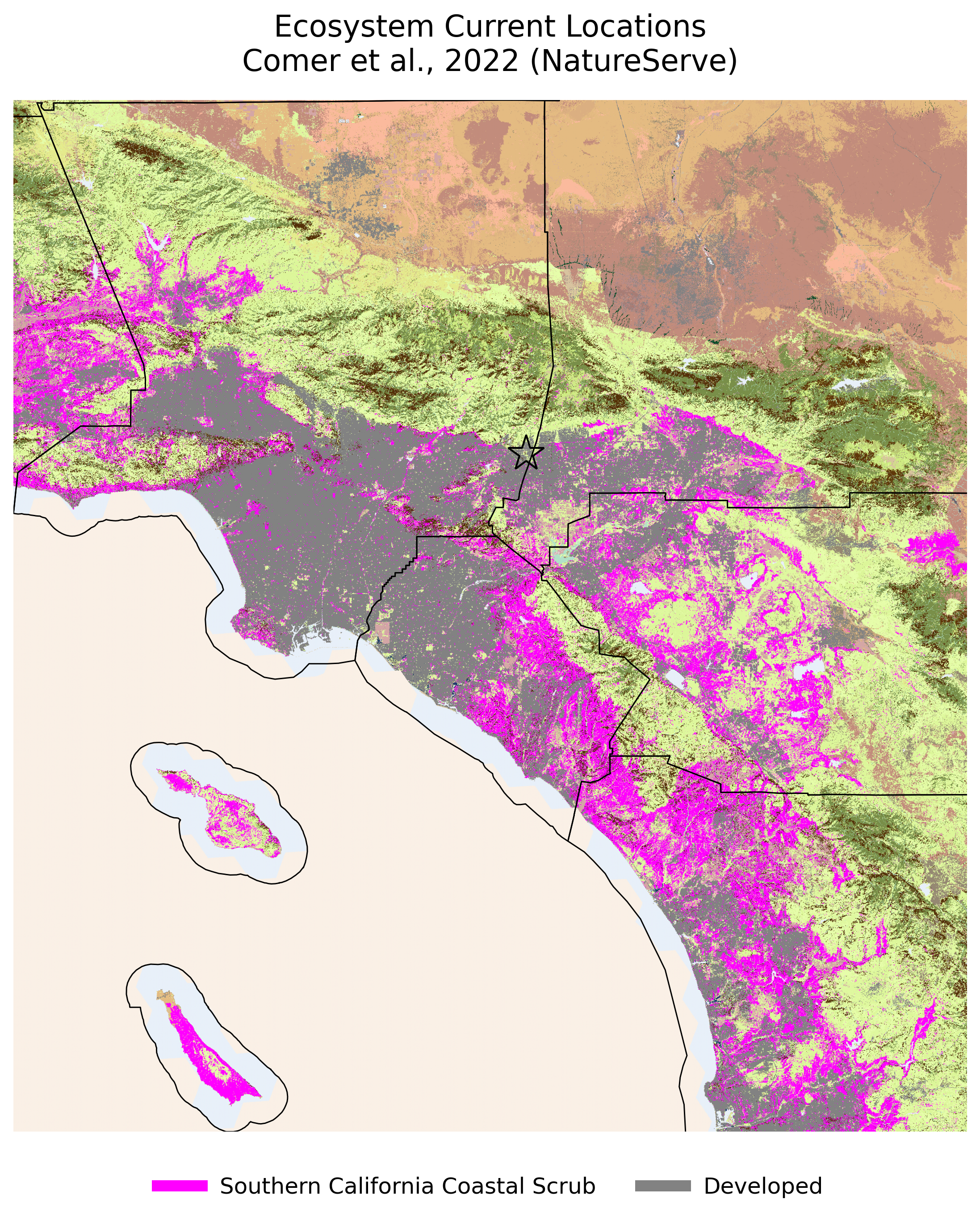
Climate models require confident knowledge of the present and preindustrial.
These figures show our best estimates for the location and extent of the Southern California Coastal Sagescrub in Los Angeles County and adjacent regions in present times and in the preindustrial. Chen (Chem ‘24) & Kavassalis

Questions that we are asking right now…
What compounds does/did this ecosystem emit into the atmosphere and why?
How does this ecosystem interact with anthropogenic pollution?
Is this ecosystem a good carbon sink?
We use a combination of models and measurements to study these biosphere-atmosphere interactions
Is this ecosystem a good carbon sink?

Pictured: Helen Chen (Chem ‘24), Anna Figge (MCB ‘27), Mia Mirabelli (CS ‘26), and Matthew Simpson (Chem-Climate, ‘27) being outstanding in their field.
Answering this question requires taking high quality measurements.
In the summer of 2024, our group set up a long-term AmeriFlux site to measure the exchange of greenhouse gases between the atmosphere and sage scrub. AmeriFlux is a network of sites measuring ecosystem CO₂, water, and energy fluxes in the Americas.
We are the only active AmeriFlux site in Los Angeles County. Matthew Simpson (Chem-Climate, ‘27) is the current lead for the AmeriFlux project and is using the data to investigate atmospheric thermodynamics.
Our measurements inform not only local questions but support global modelling and data science efforts.
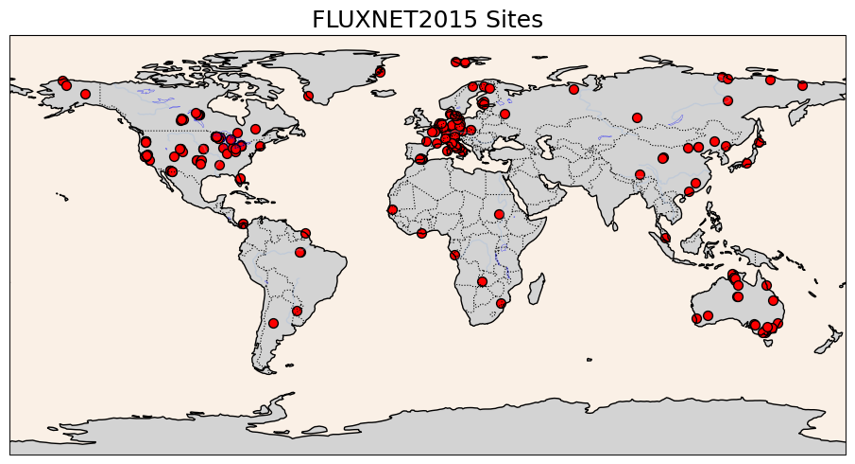
Ecosystem scale measurements like ours go into global databases commonly used for machine learning, like FLUXNET2015. These datasets are extremely sparse with significant regional biases in data density but are still being used to publish global assessments of the land-carbon sink. Anna Figge (MCB ‘27) has created a benchmark equivalent ML model for global carbon uptake to find limitations in current training datasets. This work mirrors past group work on ML for air quality and climate.
What compounds does this ecosystem emit into the atmosphere and how do they interact with anthropogenic pollution?
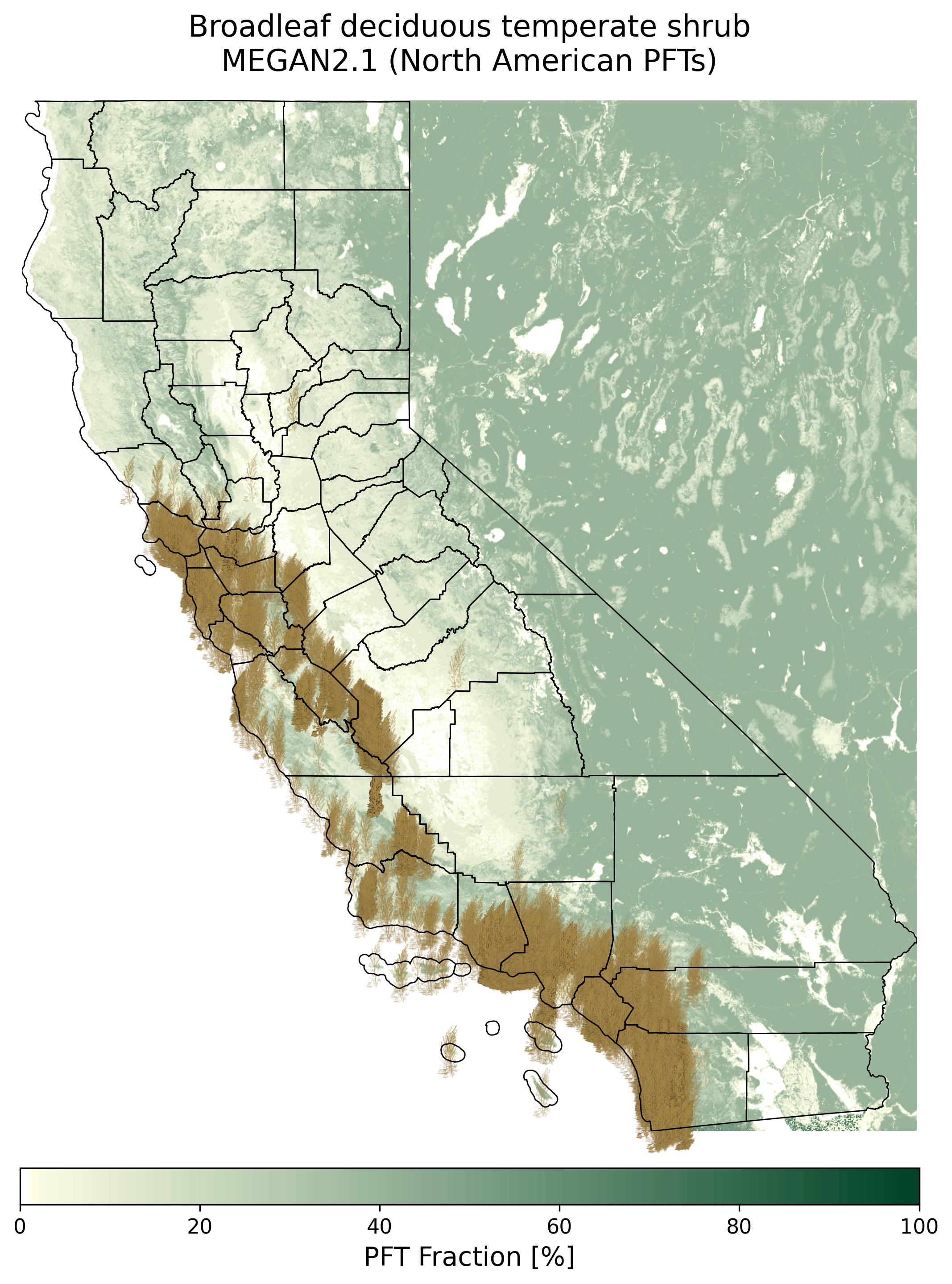
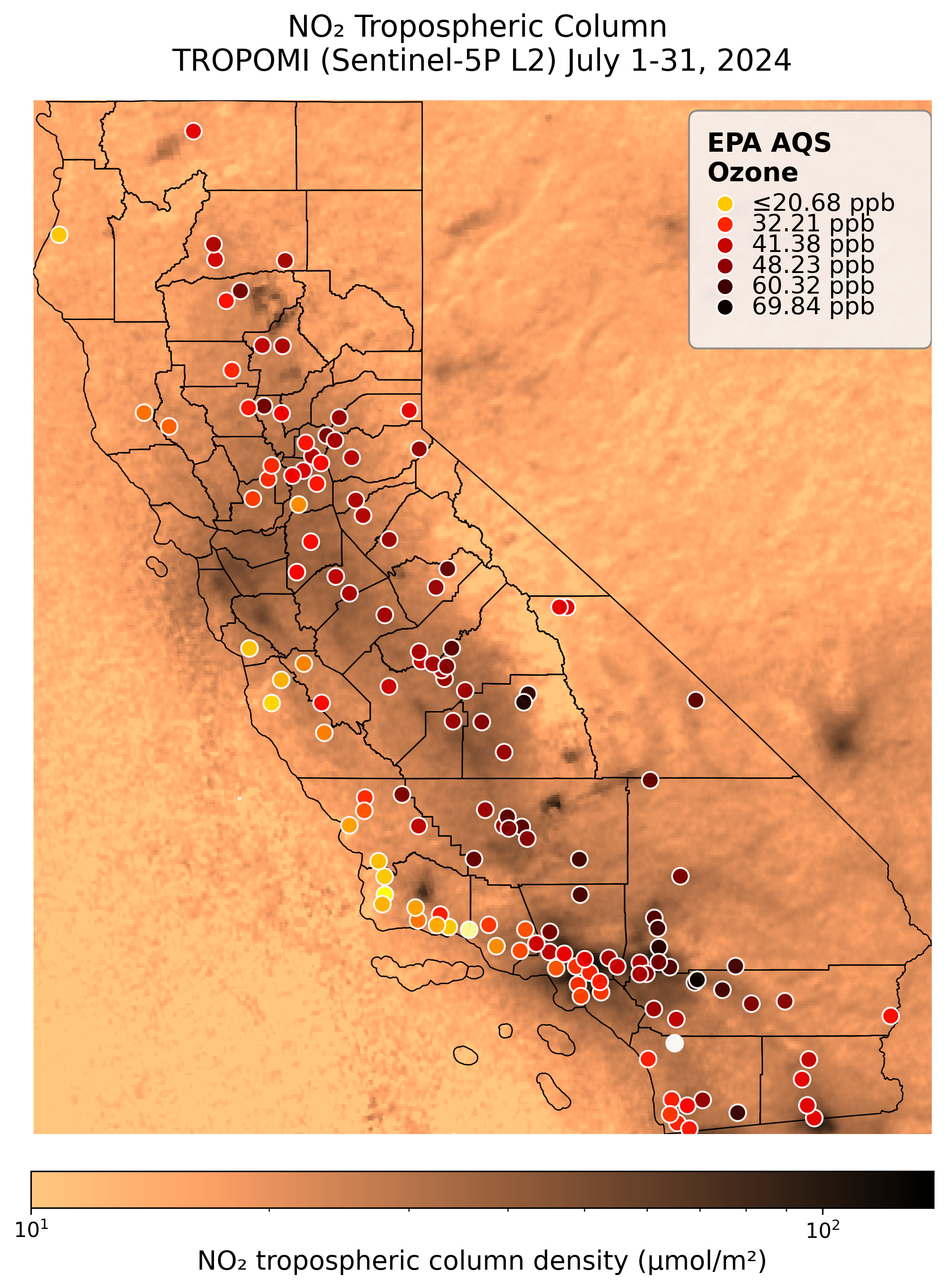
The California coastal sage scrub is characterized by the presence of Artemisia californica – an aromatic shrub that happens to now grow in some of the most heavily polluted regions of the United States. These two panels (Chen & Kavassalis, 2025) show how our group uses data from plant databases, emission inventories, satellite observations, and ground based air quality measurements to do our science in addition to our own measurements and models.
Chemical reactions of volatile organic compounds and nitrogen oxides from vehicles lead to ozone pollution.
Helen Chen (Chem ‘24) lead the first measurements of sage scrub VOCs in our group and found that our local ecosystem could be a significant source of a highly unusual and highly reactive molecule included in no current air quality or climate models! Learn more about these measurements from our group’s AGU poster on santolina triene and other compounds emitted by the sage scrub.
Oriole Song (Chem ‘25) used a variety computational techniques to provide the first reaction mechanism for an irregular terpene in the atmosphere. See their work at ACS from this Spring.
Kennetta Roebuck (Chem-Climate ‘26) is leading the group’s investigations into chemotypes of Artemisia californica and the ecological controls over their biosynthesis! We also aim to provide planting guidance for urban planners.
Thanks to the Seaver Foundation, we have new funding for an exciting extension of this project that is introduced here.
Abstracts

-
The Southern California coastal sage scrub ecosystem, exemplified by the Bernard Field Station in Claremont, California, is a critical native habitat in the Los Angeles Basin. During an investigation of volatile emissions from its characteristic plant species, including Artemisia californica, several highly reactive irregular terpenes were identified, such as Santolina triene and Artemisia triene. To gain a more comprehensive understanding of the gas-phase chemistry in our region, we are developing a mechanism for the OH-initiated atmospheric oxidation of these irregular terpenes. Our goal is to understand their potential contributions to urban smog, particularly in the context of increased native plantings in the nitrogen oxide rich environment that is Los Angeles. This poster will present our proposed mechanism along with relevant structure-activity relationship calculations.
Oriole Song* (HMC '25 Chemistry Major) and Sarah C. Kavassalis, The American Chemical Society Spring Meeting, March 2025
-
At the Bernard Field Station in Claremont, California, a site representative of pre-urbanized Southern California's coastal sage scrub ecosystem, we investigated the volatile organic compound (VOC) emissions from dominant plant species. Using headspace SPME-GC-MS, we identified leaf-level emissions from characteristic species, including Artemisia californica, Eriodictyon trichocalyx var. trichocalyx, and Eriogonum fasciculatum var. foliolosum, during the summer of 2024. Our findings demonstrate that the VOC profile in this ecosystem is rich in highly reactive, irregular terpenes, such as Santolina triene, along with common monoterpenes like alpha-pinene and camphene. Substantial emissions of sesquiterpenes, including Caryophyllene and Germacrene D, were also detected. In addition to direct plant measurements, we performed offline VOC measurements of ambient air to confirm the presence of these VOCs in the atmosphere. Our ongoing efforts include modelling the gas-phase oxidation of Santolina triene, the most abundant monoterpene observed during our leaf-level experiments (with predicted OH and O₃ rate constants of approximately 1.7x10⁻¹⁰ cm³ /molecule/s and 4.5x10⁻¹⁶ cm³ /molecule/s, respectively). Understanding the unique VOC makeup of this ecosystem is crucial for simulating preindustrial air quality and will provide insights into future urban air quality as these native plants become common urban lawn replacements in the Los Angeles basin.
Sarah C. Kavassalis, Helen Chen (HMC '24 Chemistry Major), and Oriole Song* (HMC '25 Chemistry Major), The American Geophysical Union Fall Meeting, D.C., December 2024.
-
Machine learning and data-driven methods show promise as complements to physics-based Earth system forecasting. While geospatial relationships and teleconnections are key to real-world atmospheric and oceanic dynamics, spatial features have yet to be widely incorporated into machine learning methods. This work explores the application of graph neural networks, which explicitly encode spatial relationships, to the task of forecasting chaotic spatiotemporal data. The data for this study is generated using the Lorenz-96 model, a simplified yet chaotic surrogate for atmospheric dynamics. Preliminary results indicate the potential for explicit spatial encodings to improve forecast accuracy over networks that lack spatial encodings.
Hannah Lu* (HMC '24 Math-CS Major), Mia Mirabelli (HMC '25 CS Major), and Sarah C. Kavassalis, The American Geophysical Union Fall Meeting, San Francisco, CA. December 2023.
-
Artificial Intelligence (AI) techniques, often described as 'black-box' models, are increasingly applied to atmospheric composition and pollution modeling. However, these techniques fail to provide insight into the underlying rationale for predictive outcomes, inducing a lack of trust in their results. To address this challenge, our research explores the efficacy of the explainable artificial intelligence (XAI) approach known as layerwise relevance propagation (LRP), when applied to long short-term memory (LSTM) models. This approach is aimed at increasing the transparency and interpretability of complex AI models. Our study focuses on predictions of ozone concentrations in Los Angeles, a region with extensive research into factors influencing ozone production. We postulate that if the LRP results align with our current scientific understanding of ozone formation, the credibility of predictions generated by deep neural networks such as LSTMs is enhanced. Preliminary results indicate that, while the LRP output aligns with chemical intuition for influencing factors of ozone pollution in some cases, it falls short of full alignment. This mixed outcome, however, still carries implications for improving the trustworthiness of these AI-based techniques in atmospheric composition studies.
Georgia Klein* (HMC '24 CS Major), Avani Anne (HMC '25 Physics-CS Major), and Sarah C. Kavassalis, The American Geophysical Union Fall Meeting, San Francisco, CA. December 2023.
-
Exposure to particulate matter less than 2.5 um in diameter (PM2.5) presents profound health and environmental implications, driving the need for appropriate representation in air quality and Earth system models of all scales. The accurate prediction of PM2.5 levels and composition in chemical transport models (CTMs) is hindered by the complexity of chemical reactions required to produce realistic secondary organic aerosols, along with the diversity and aperiodicity of primary emission sources. Using machine learning, we demonstrate a computationally efficient alternative to mechanistic PM2.5 prediction. A random forest is trained on hourly criteria pollutant observations from the EPA's Air Quality System (AQS), along with traditional CTM inputs - gridded emission inventory and reanalysis meteorological data to make PM2.5 predictions across diverse landscapes in the United States. Our approach can make high-accuracy predictions with significantly reduced computational needs. Data-driven predictions have essential limitations, though, and we show examples of model weaknesses, particularly in areas of disparate data density, changing photochemical production regimes, and in the face of disruptive phenomena such as wildfires.
Helen Chen*, (HMC '24 Chem Major), Angela Anqi Zhou (Scripps ’25, Data Science Major), and Sarah C. Kavassalis, The American Geophysical Union Fall Meeting, San Francisco, CA. December 2023.
-
Since 1969, the U.S. Environmental Protection Agency has regularly published criteria reports (now called Integrated Science Assessments), which guide air quality policy in the United States. As mandated by the Clean Air Act, the reports summarize the "best available science" on various criteria air quality pollutants to support decision-making. However, since the notion of "best available science" can be subjective and potentially politicized, what empirically distinguishes the “best available science” cited in these reports?
We use Latent Dirichlet Allocation (LDA)—an unsupervised topic modeling approach to find trends among words that occur together in documents—to model a collection of abstracts from scientific papers cited in EPA Criteria Reports and Integrated Science Assessments. Through our analysis, we seek to better characterize what distinguishes the scholarship cited in these reports in order to grant scientists insight into how to write more impactful papers.
Our topic modeling reveals trends that evolve over time in the areas of policy, experimental subject areas, and experimental methodologies. Latent topics regarding policy and strategies for change appear and change throughout time across reports. Topics regarding health studies not only show consistently high prevalence but also allow us to differentiate types of experimental design and observe how specific experimental design norms have gained and lost popularity over time.
Stephanie Fulcar* (HMC ’25 CS/Linguistics Major), Clifford Ashmun* (HMC ’24, Chemistry/CS IPS), Jeremy Bakken (HMC ’23, Physics Major), Anna Ding (HMC ’23, CS Major), J.P. Walker (Scripps ’25, Math Major), Alexandra Schofield, and Sarah C. Kavassalis, The American Geophysical Union Fall Meeting, San Francisco, CA. December 2023.
-
Urban grime, a complex film formed by the deposition of organic and inorganic pollutants, can be an important medium for heterogeneous chemistry in cities. Experimental evidence from ambient grime sampling and laboratory-made proxies have uncovered a wide range of chemical compositions, relevant reactions, and thus highly varied potential consequences for urban air quality. Explicitly modeling this chemistry is challenging, given the multiphase nature of grime. We present progress on a novel modeling framework based on cellular automata that can simulate the deposition and partitioning of gases and aerosols onto surfaces and their subsequent chemical reactions for common grime constituents. We use this model to identify the ambient conditions under which urban grime can act as a NOx sink or source. While our grime automata model is 2-dimensional (representing chemistry on smooth surfaces), our approach is generalizable to 3-dimensions for ambient aerosol chemistry simulation.
Ali Talib Saifee* (HMC '24 Chem-Bio Major), Olivia Russell (HMC '23 CS Major), and Sarah Kavassalis, The American Chemical Society Spring Meeting, Indianapolis, IN. March 2023.
More on Ali Talib’s grime work: https://www.ficus.space/grime